By Nikko A. Balbedina III
PressOne.PH

Despite the international availability of tuberculosis (TB) medicines, Filipino patients have faced recurring shortages that a medical humanitarian organization says are linked to problems in the government’s procurement system.

Why it matters: When TB medicines run short, patients may be forced to interrupt or delay treatment, increasing the risk of drug resistance and transmission while shifting costs onto families. These recurring shortages also underscore the need for procurement reforms that can keep essential medicines reliably available.
What’s happening: The Philippines ranks third globally in TB burden, accounting for 6.8% of all TB cases worldwide in 2024, according to the World Health Organization.
- The country recorded about 500 new TB cases per 100,000 people in 2024. Its TB incidence rate has risen by about 5% since 2015, even as the global rate declined.
- According to Doctors Without Borders (Médecins Sans Frontières, MSF), the Philippines has also faced recurring TB medicine stock-outs, with the current procurement breakdown ongoing since late 2023 and multiple government bidding rounds for essential medicines failing.
- In March 2026, MSF warned of another projected national stock-out of first-line drug-sensitive TB medicines, while noting that some areas may still have stocks from previous orders or locally procured gap-fill medicines.
- When public stocks run out, MSF says families may be forced to purchase medicines from private pharmacies, with reported costs of P15,000 to P30,000 or more.
The procurement problem: The shortage is not being driven by a lack of TB medicines on the international market, according to MSF. Instead, the organization says the problem lies in the Philippines’ public procurement process.
- The government purchases TB medicines through public bidding, but MSF says multiple rounds of bidding for essential medicines have failed since late 2023 because the terms offered were unattractive to qualified suppliers.
- This resulted in a recurring gap between medicines available internationally and medicines reaching patients through the public health system.
- MSF says the problem is not unique to a single health facility or locality, with the government projecting a national stock-out of first-line drug-sensitive TB medicines in April 2026.
- The shortage is national, but the experience isn’t necessarily uniform as some local governments have procured gap-fill medicines locally. This means that the impact of the national stock-out may not be felt at the same time in every area.
This is not new: Previous research and government data have documented TB medicine stock-outs in the Philippines for years, with treatment interruptions carrying significant health and economic consequences.
- An analysis by the Systems for Improved Access to Pharmaceuticals and Services (SIAPS) found that stock-outs of some TB medicines had been a problem in the Philippines, alongside patients being lost to follow-up, both of which resulted in treatment interruptions.
- The study estimated that as many as 2,663 drug-sensitive TB patients may have been unable to obtain medicines from the public sector for a month or more in 2014.
- Researchers estimated that those stock-outs could have resulted in up to $21 million (about P1.2 billion) in additional economic costs, including $19.5 million (about P1.1 billion) in household costs from out-of-pocket spending and lost productivity.
- It also estimated that preventing a treatment interruption could save society up to about $8,000 per affected patient, underscoring the economic case for preventing medicine stock-outs.
What this looks like: In Tondo, Manila, the medicine shortage has left some patients unable to start or complete TB treatment despite being diagnosed.
- MSF reported that more than 300 people had been diagnosed with TB through its active case-finding activities in Tondo since January 2024, but some could not begin treatment because medicines were unavailable.
- Some patients who had already started treatment were also unable to complete it because medicines needed for the continuation phase were unavailable, while others became hesitant to undergo screening for fear of being diagnosed without access to treatment.
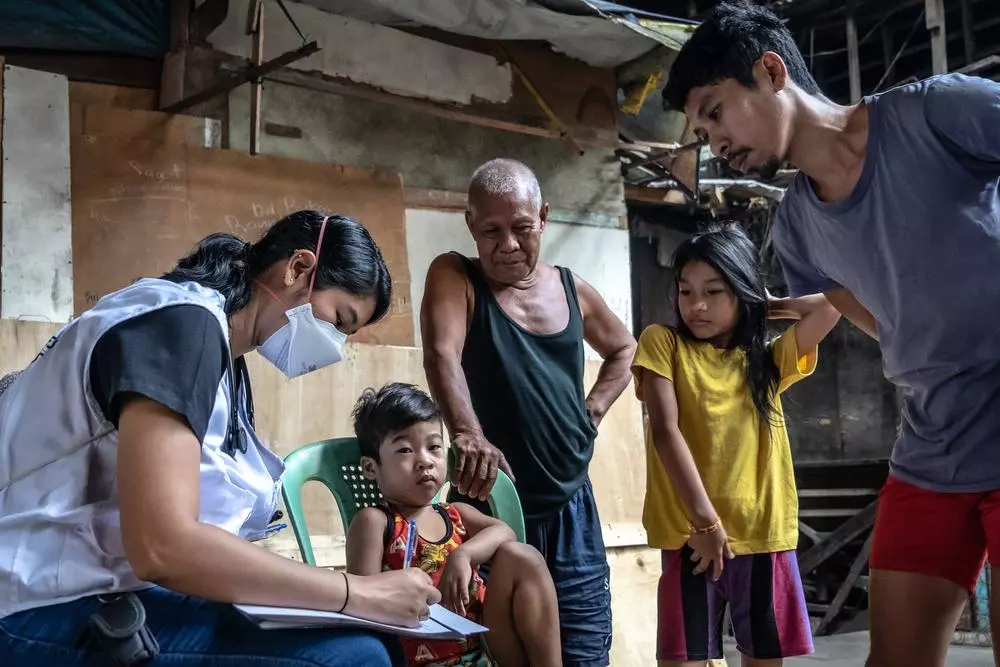
Doctors Without Borders plugs gaps in TB drugs shortage in Tondo, Manila in coordination with Manila Health Department
What’s being done: Efforts to address the shortages have focused on filling immediate gaps while pursuing a more sustainable way to procure TB medicines.
- In 2024, MSF provided 54,720 tablets of TB medicines to the Manila Health Department, enough to support treatment for 141 patients in Tondo who were waiting to start or complete treatment.
- MSF described the intervention as a temporary solution, saying recurring disruptions in TB drug procurement require a more durable response.
- One option MSF has identified is the Global Drug Facility, an international procurement mechanism for TB medicines that the organization says could help secure a more reliable supply.
- Through Republic Act No. 12009, the New Government Procurement Act, the Philippines has a legal pathway to procure TB medicines directly from the Global Drug Facility, which could provide a more reliable source of essential medicines.
Bottom line: TB medicines are available. What patients need now is a procurement system that makes sure they reach them.


0 Comments